Rapporti della science Factorio: pack, SPM e colli
I rapporti scientifici di Factorio ti aiutano a tradurre un obiettivo di ricerca in assemblatori, fonderie, prodotti petroliferi, circuiti, nastri e potenza elettrica. Usa questa pagina quando sai quali science pack vuoi sostenere, ma ti serve un modello di pianificazione piu chiaro rispetto a note sparse del wiki o a una singola cheat sheet statica. Per la scienza blu o verde parti dall'obiettivo SPM e controlla ricetta, consumo dei laboratori, carico dei nastri e potenza invece di copiare un numero fisso di macchine.
Ultimo aggiornamento: 12 settembre 2026. Include note sulla scienza classica, SPM e pianificazione di Space Age.
Risposta rapida: cosa sono i rapporti scientifici di Factorio?
I rapporti scientifici sono le relazioni tra macchine e risorse necessarie per mantenere il flusso degli science pack a una velocita obiettivo. In pratica, la maggior parte dei giocatori pianifica la scienza in science per minute (SPM), poi risale a ritroso verso input, numero di macchine e limiti di trasporto.
- Usa i rapporti scientifici quando la tua vera domanda e come sostenere 60, 100, 250 o 1000 SPM.
- Il classico rapporto scientifico e solo un punto di partenza, perche i moduli, i livelli degli assemblatori e la logistica di Space Age possono cambiare il numero esatto di macchine.
- Un piano scientifico fallisce piu spesso perche petrolio, circuiti, fusione o throughput dei nastri restano indietro rispetto agli assemblatori di science pack visibili.
- Usa un calcolatore in tempo reale quando il progetto include moduli, blocchi con beacon, livelli di macchine misti o spedizioni interplanetarie di Space Age.
La pianificazione scientifica e un problema che riguarda l'intera fabbrica
Un obiettivo scientifico sembra semplice sulla carta, ma ogni SPM aggiuntivo moltiplica la domanda a monte. Basta una catena del petrolio mancante, una carenza di red circuit o un nastro saturo per interrompere l'intero rifornimento dei laboratori, anche quando il rapporto scientifico finale sembra corretto.
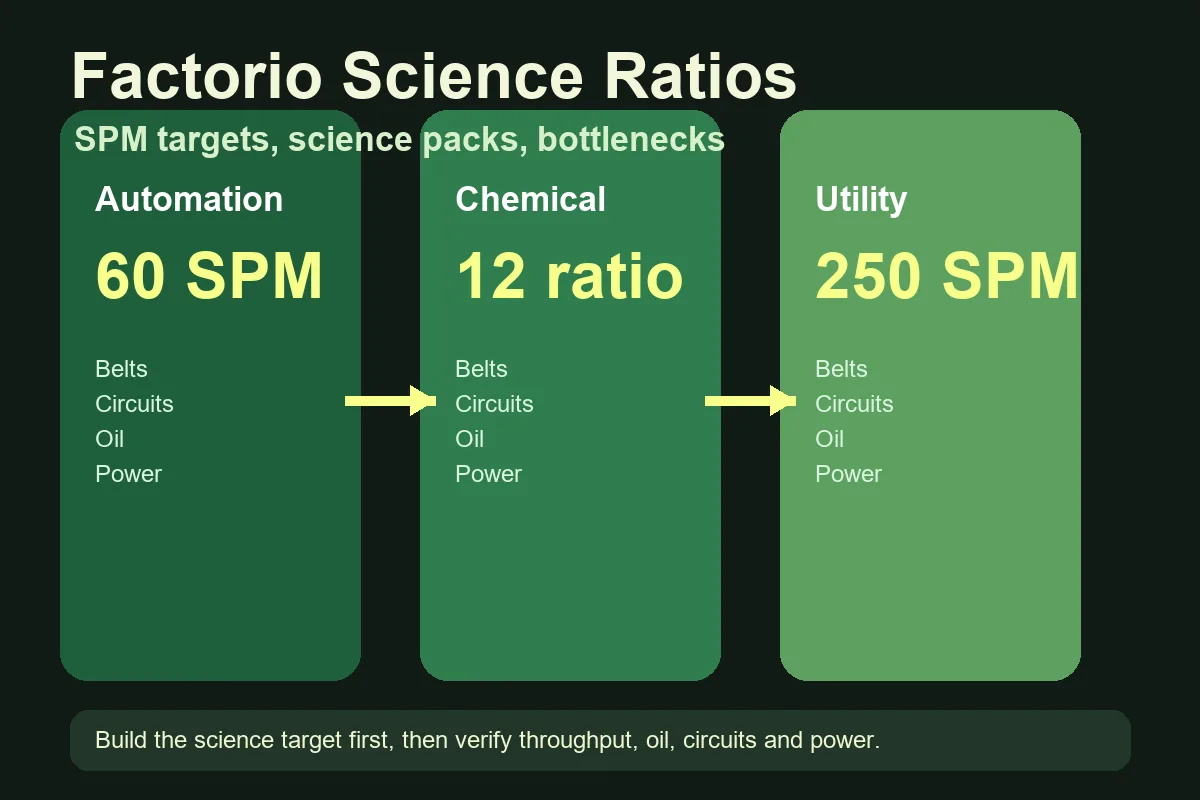
Inizia da un obiettivo scientifico, non da un rapporto memorizzato
La giusta domanda di pianificazione non e solo “qual e il rapporto”, ma “quale velocita di ricerca voglio sostenere?” SPM e il punto decisionale piu chiaro perche corrisponde al modo in cui i giocatori dimensionano la fabbrica.
| Obiettivo | Uso tipico | Impatto sulla pianificazione |
|---|---|---|
| 60 SPM | Progressione confortevole della base principale | Abbastanza piccola da consentire layout puliti basati su belt e debug semplice. |
| 100-250 SPM | Scalabilità strutturata di metà/fine partita | Petrolio, circuiti, rifornimento ferroviario ed energia diventano vincoli più evidenti. |
| 500-1000 SPM | Grande base ottimizzata | Beaconing, capacità della rete ferroviaria, UPS e progettazione logistica contano più dei rapporti mandati a memoria. |
| SPM specifico del pianeta | Pianificazione dell'espansione Space Age | La produzione locale e il trasporto interplanetario possono essere il vero collo di bottiglia. |
Riferimento classico dei rapporti dei Science Pack
Per il classico set di science pre-Space Age, qui sotto è mostrato un rapporto comune sincronizzato degli assemblatori. È utile come promemoria rapido, ma solo finché le ipotesi di base sulle macchine restano coerenti.
| Science Pack | Rapporto relativo | Cosa di solito diventa il primo collo di bottiglia |
|---|---|---|
| Automation science | 5 | Di solito è facile; ingranaggi e rame sono semplici. |
| Logistic science | 6 | Inserter e belt aumentano presto la pressione sul ferro. |
| Scienza militare | 5 | Granate, muri e munizioni perforanti possono alterare i tempi. |
| Scienza chimica | 12 | La lavorazione del petrolio e l'impostazione di zolfo/plastica di solito rallentano i progressi. |
| Scienza di produzione | 7 | Binari, forni e moduli di produttività aumentano notevolmente la domanda. |
| Scienza di utilità | 7 | Circuiti blu, LDS e telai per robot volanti mettono sotto pressione più sistemi contemporaneamente. |
Esempio di rapporto della Scienza verde per 60 SPM
Per una verifica concreta della scienza logistica, 60 SPM equivalgono a un pacchetto di scienza verde al secondo. Con assembling machine 2 e senza moduli, la ricetta da sei secondi richiede otto assemblatori finali; questi assemblatori richiedono inoltre in totale un inserter e un transport belt al secondo.
| Fase di pianificazione | Obiettivo 60 SPM | Cosa verificare |
|---|---|---|
| Output finale dei pacchetti | 1 pacco di scienza logistica/s | Usa la velocità di fabbricazione effettiva del livello di assemblatore scelto. |
| Assemblatori finali | 8 assembling machine 2 | Ricalcola dopo aver aggiunto moduli, beacon o livelli di macchine misti. |
| Ingredienti diretti | 1 inserter/s e 1 transport belt/s | Controlla la disponibilità condivisa di ingranaggi e ferro prima di copiare il blocco. |
| Margine di trasporto | Più della media esatta | Le carenze spesso derivano da una domanda intermittente del mall o da un carico non uniforme sulle belt. |
Workflow consigliato per pianificare gli SPM
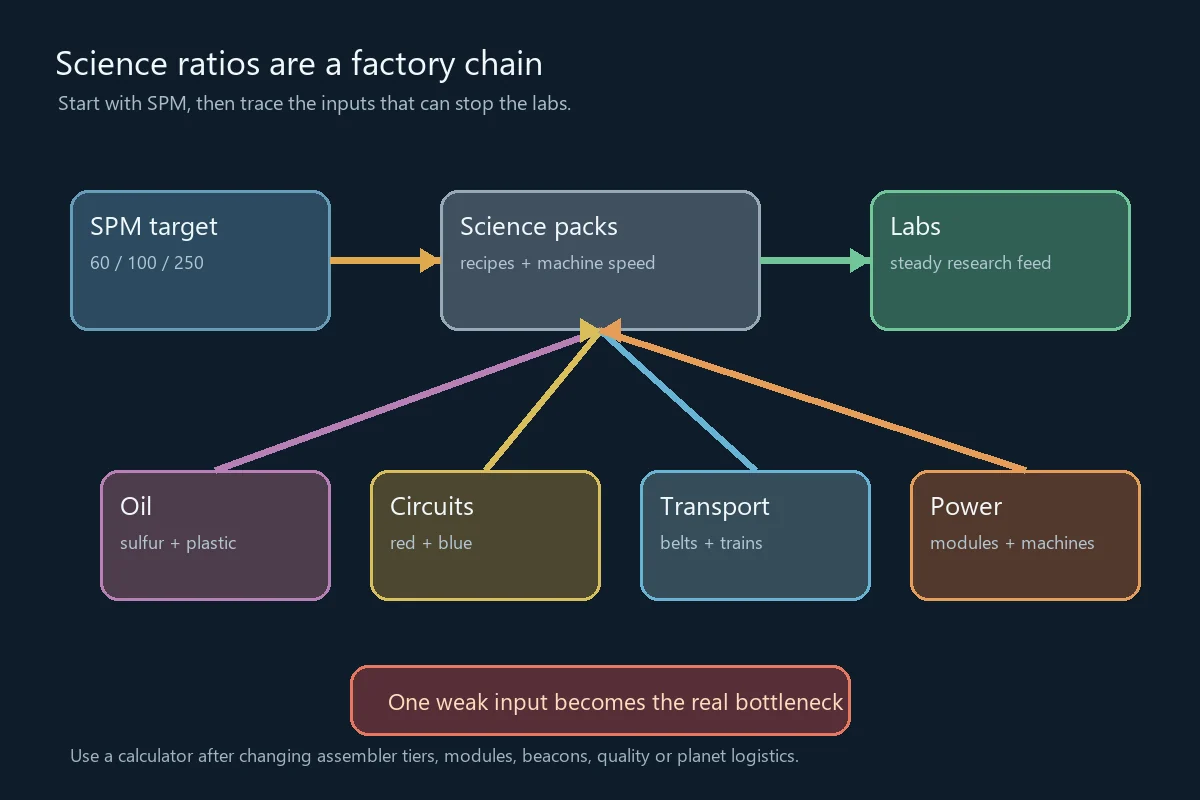
Scegli un solo obiettivo di SPM
Definisci un obiettivo chiaro, come 60, 120 o 250 science al minuto, prima di posizionare le macchine.
Suddividi la science nei sistemi a monte
Separa fusione, circuiti, petrolio, low density structures, robot frames e moduli così da rendere visibili i veri punti di pressione.
Controlla il numero di macchine e la velocità di produzione
Il livello degli assembler e la scelta dei moduli possono cambiare la produzione di science abbastanza da rendere imprecisa una tabella statica.
Controlla belt, pipe e treni
Molti progetti di science falliscono perché il throughput e la consegna non tengono il passo con la pulita matematica delle ricette.
Ricalcola dopo aver aggiunto moduli o sistemi di Space Age
Produttività, beacon, quality e spedizioni interplanetarie cambiano tutti il piano effettivo della science.
Dove di solito si rompono le basi di science
Petrolio sottodimensionato
La science chimica, i blue circuits e i pack del late game spesso falliscono perché raffinerie, cracking e supporto di petroleum sono troppo piccoli.
Carenza di circuiti
I red circuits e i blue circuits diventano dipendenze condivise tra più pack e livelli dell'infrastruttura.
Saturazione del trasporto
Anche un rapporto corretto della science fallisce se belt, treni, inserter o bot non riescono a sostenere il flusso di oggetti.
Ritardo della rete elettrica
Le espansioni della science spesso sembrano corrette finché moduli, roboport e fusione non portano la rete a cali di tensione.
Esempi iniziali di Science Pack
La domanda di ricerca include i rapporti della green science e i rapporti della red science. Mantieni questi esempi all'interno di questa pagina sulla science perché supportano la pianificazione SPM invece di richiedere pagine separate.
| Pack | Nota iniziale di pianificazione | Quando ricalcolare |
|---|---|---|
| Automation science | Abbastanza semplice da dimensionare partendo da ingranaggi e copper plates. | Quando i livelli degli assembler o i moduli sono diversi. |
| Scienza logistica / verde | Nastri e inserter aumentano presto la pressione sul ferro. | Quando la produzione di nastri alimenta anche un mall o un'espansione. |
| Military science | Granate e munizioni possono compromettere un rapporto pulito. | Quando la domanda di difesa condivide gli stessi ingredienti. |
| Chemical science | L'impianto petrolifero di solito diventa il vero collo di bottiglia. | Quando petroleum, sulfur o plastic si accumulano. |
I rapporti della science in Space Age richiedono più di tabelle statiche
Space Age cambia la pianificazione della science perché la domanda non è più solo quanti assembler producono ogni pack. Ricette specifiche del pianeta, ritmo della logistica, decisioni sulla quality e rifornimento della platform possono tutti ridefinire il rapporto effettivo.
| Fattore di Space Age | Perché cambia i calcoli della science | Abitudine di pianificazione migliore |
|---|---|---|
| Ricette specifiche del pianeta | Ogni catena della science può dipendere da un ambiente produttivo diverso. | Risolvi prima la catena locale, poi aggiungi il trasporto. |
| Razzi cargo e piattaforme | I tempi di consegna possono limitare la scienza prima della resa delle ricette. | Converti la domanda di pack nella cadenza delle spedizioni. |
| Moduli di qualità | Le rese basate sulla probabilità modificano il fabbisogno di macchine. | Pianifica gli obiettivi di qualità separatamente dalla scienza di base. |
| Differenze di potenza | Una rete elettrica debole o instabile può rallentare un'intera catena della scienza. | Controlla la potenza locale prima di espandere i laboratori. |
Ti servono conteggi esatti delle macchine per la scienza?
Usa il calcolatore live di Factorio per convertire gli obiettivi SPM in assemblatori, input, nastri, moduli e requisiti di potenza, poi usa questa pagina per verificare i punti deboli.
Domande frequenti sui rapporti della science di Factorio
Qual è il rapporto classico della scienza in Factorio?
Un riferimento classico comune è 5:6:5:12:7:7 per automation, logistic, military, chemical, production e utility science. Consideralo una guida rapida, non una build universale e precisa.
Dovrei pianificare la scienza in base ai rapporti o agli SPM?
Pianifica prima in base agli SPM. I rapporti aiutano a spiegare le relazioni, ma la scienza al minuto è l'obiettivo di costruzione più chiaro per macchine, trasporto ed energia.
Perché la mia configurazione della scienza si blocca anche quando il rapporto sembra corretto?
Le cause più comuni sono carenze di petrolio, colli di bottiglia nei circuiti rossi o blu, nastri saturi, ritardi dei treni, energia insufficiente o modifiche ai moduli che non sono state ricalcolate.
I moduli cambiano i rapporti della scienza in Factorio?
Sì. I moduli di produttività, i moduli di velocità e gli effetti dei beacon cambiano la produzione effettiva e la richiesta di ingredienti, quindi il numero di macchine dovrebbe essere ricalcolato.
Space Age cambia la pianificazione dei rapporti della scienza?
Sì. Space Age aggiunge pianeti, ritmi logistici, sistemi di qualità e nuove dipendenze, quindi una tabella statica della scienza diventa solo un punto di partenza.
Qual è il rapporto della scienza verde in Factorio?
La scienza verde dipende dalla fornitura di inserter e transport belt, quindi la risposta utile per la pianificazione non è solo un conteggio finale degli assemblatori. Dimensiona la scienza logistica in base al tuo obiettivo SPM, poi controlla se iron plate, gear e la produzione di belt stanno alimentando anche un mall o un'espansione.
Quanti assemblatori mi servono per 60 SPM di scienza verde?
Con assembling machine 2, la normale ricetta di scienza logistica da sei secondi e senza moduli, usa otto assemblatori finali per 60 scienza al minuto. Ricalcola se la velocità di crafting, la produttività, il comportamento della ricetta o la logistica di Space Age cambiano le ipotesi.
Qual è il rapporto della scienza blu in Factorio?
Dipende dall'obiettivo SPM e dal livello degli assemblatori, quindi non esiste un numero universale. Parti dalla scienza blu al minuto, calcola zolfo, motori e circuiti avanzati, poi verifica petrolio e capacità dei nastri.
Come calcolo i rapporti della science di Factorio per un obiettivo di 60 SPM?
Imposta 60 unità di science al minuto come obiettivo, calcola gli assemblatori dei pack finali e segui ogni ricetta fino a laboratori, nastri, petrolio, circuiti ed energia. Il numero esatto dipende dalla versione della ricetta, dal livello delle macchine, dai moduli, dai beacon e dalla logistica di Space Age.
Fonti e ulteriori letture
Questi riferimenti aiutano a verificare i dati dei science pack, le relazioni tra ricette e il comportamento del calcolatore.